

This Week in Eating
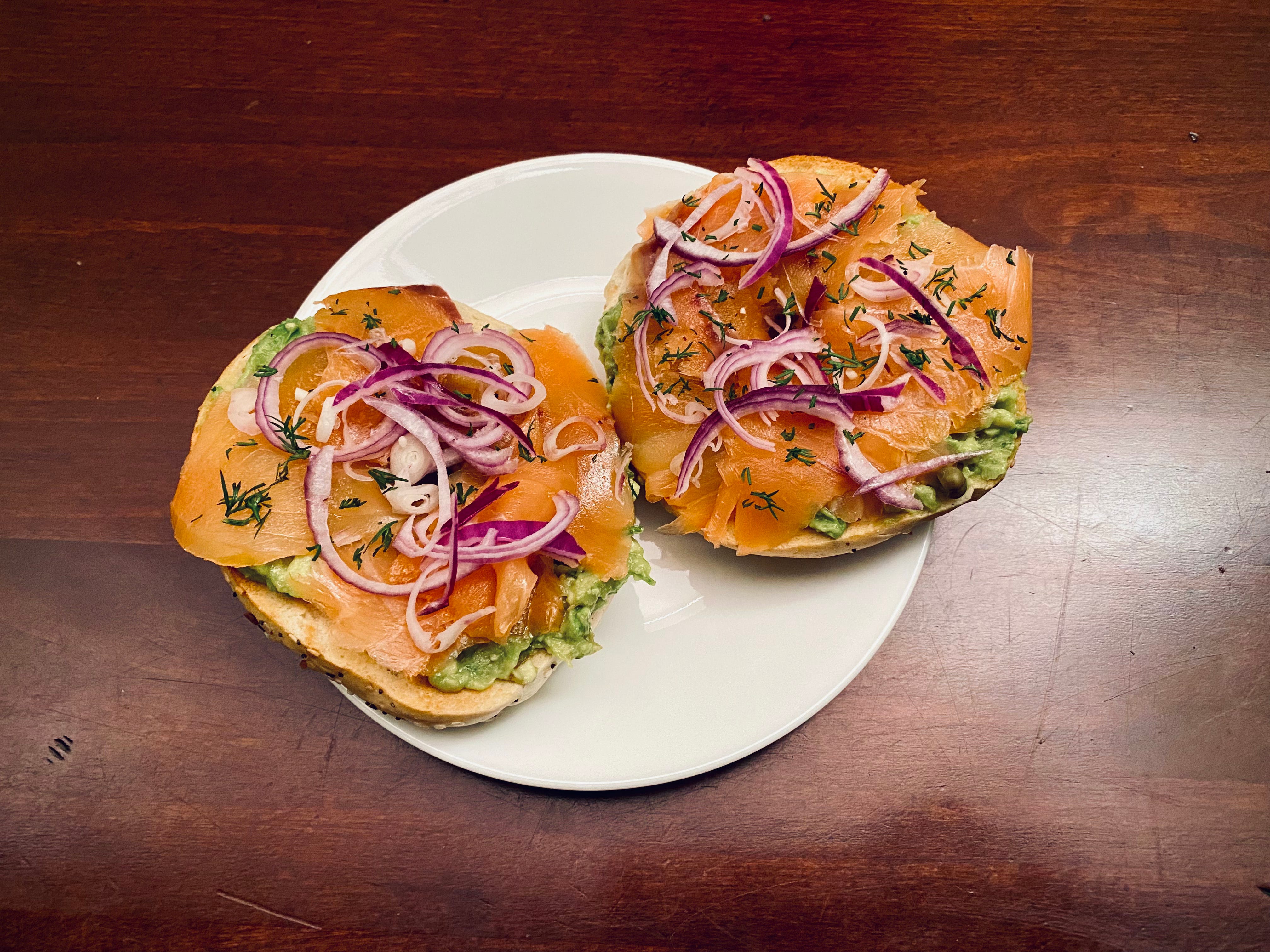
One of my favorite breakfasts is a bagel with smoked salmon, cream cheese, capers, red onion, and dill. It has lots of protein and is super savory. This week, I got a deal on avocados. So, with some jalapeno, onion, and lime, I had an excellent substitute for the cream cheese.


I’ve mentioned my love of chickpeas here before, and one of my staples, when I come across some cauliflower, is a cauliflower and chickpea curry. A head of cauliflower, 3-4 cups of chickpeas, 3-4 cups of crushed tomatoes, a can of coconut milk, and some spices make a huge delicious batch, and I almost always have some ready to go in the freezer. I defrosted some for dinner this weekend and made rice to accompany it.

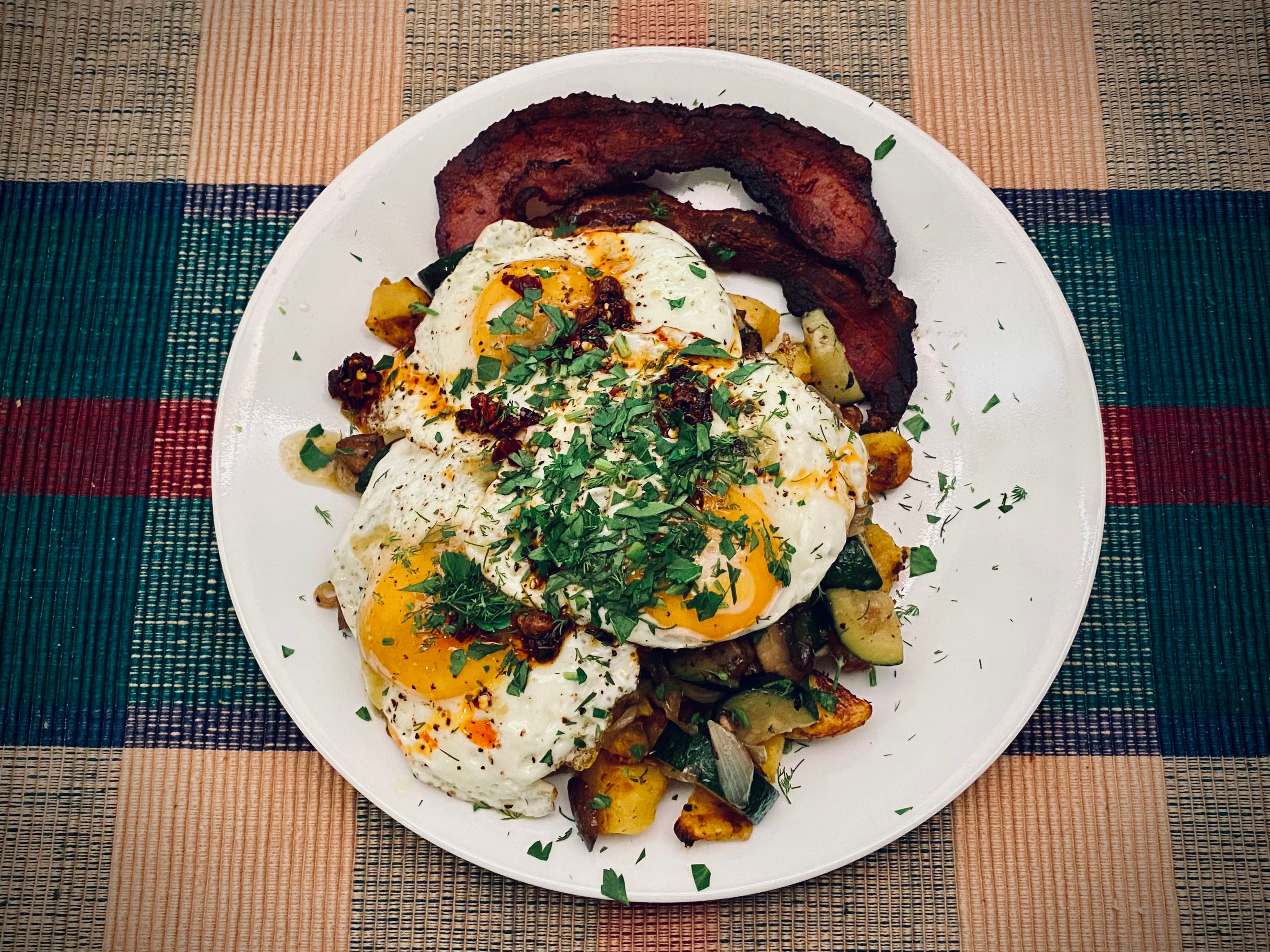
On Sunday morning, I roasted a few Yukon golds and acorn squash for this week’s lunch salads and sauteed zucchini, mushrooms, and onions. I topped all that with some fried eggs and bacon for brunch.
Sunday night, I baked a chicken with some carrots and had a breast with the leftover rice, roasted veggies, sauteed zucchini and mushrooms, carrots, and a nice pan sauce.

I shredded the rest of the chicken and tucked the carcass away in the freezer to make some stock for future soups.
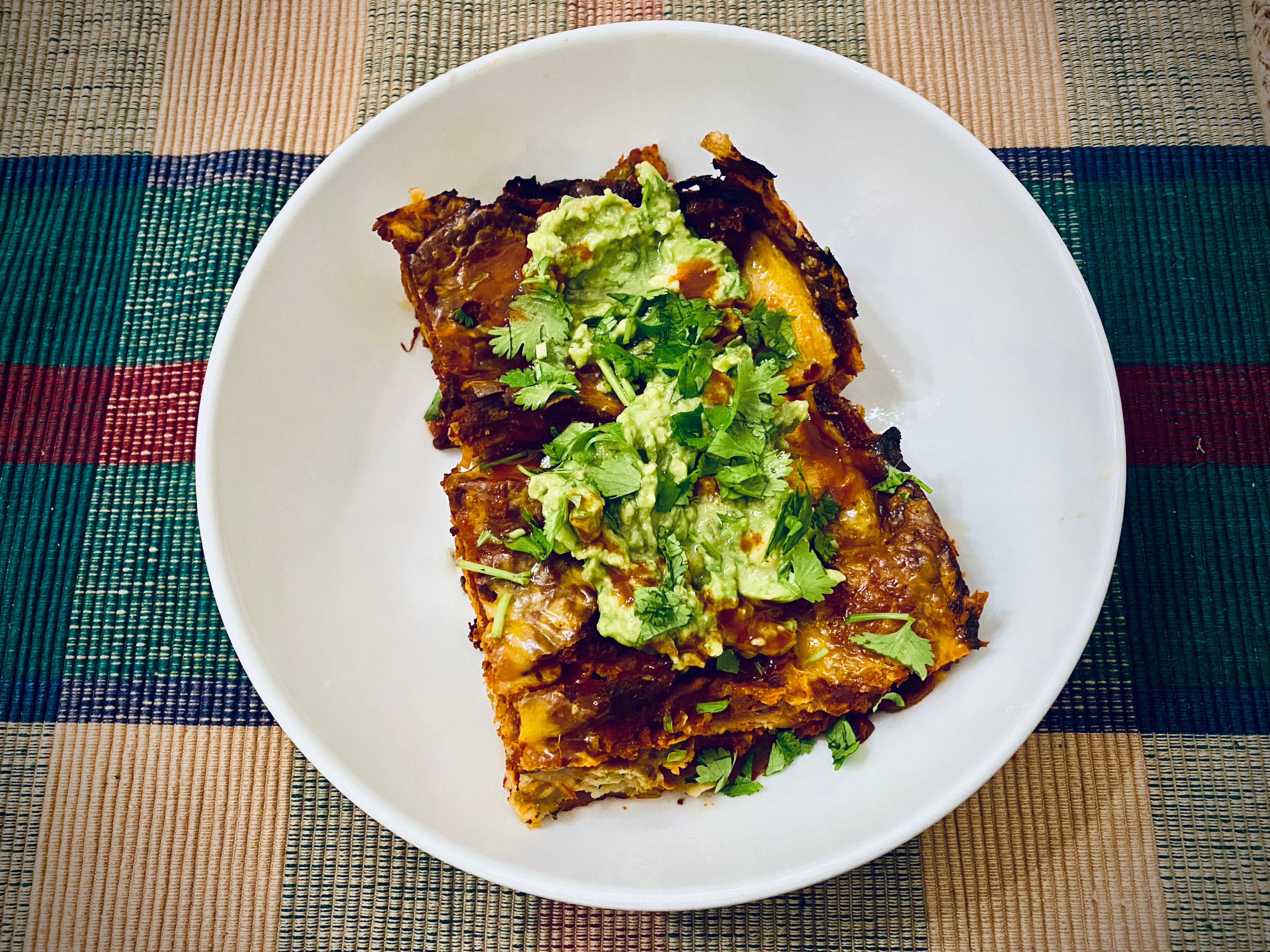
Monday, I put my ongoing tortilla surplus, shredded chicken, roasted green chile, and some dried guajillo and ancho peppers to work and made some enchiladas.


Other Bagel News

Northwest Denver has a shocking shortage of good bagel shops. The only one I’m aware of is Leroy’s. We now have a new entrant, Call Your Mother. Early reviews are good.

Don’t miss this profile from Priya Krishna of an authentic bagel hero, Celestino Garcia.
And on the topic of the immigrants that keep the country running, check out this fascinating story about the roadside restaurants in Texas, New Mexico, and elsewhere that serve the Punjabi truckers who make up 20% of the American trucking industry.
The Vega Truck Stop and Indian Kitchen, as it’s officially known, attracts truckers like Singh originally from Punjab, a region spanning northwest India and eastern Pakistan. The store is filled with Punjabi snacks, sweets, truck decorations and a restaurant, known as a dhaba, that serves fresh meals including paratha and butter chicken — a slice of South Asia in the middle of rural Texas.
That afternoon, Singh parked his truck, decorated with colorful fabrics and ornaments called jhalars and parandas. He was promptly greeted in Punjabi by another trucker, Amandeep Singh, of Fresno, Calif., who had also stopped for lunch. As they each poured a cup of steaming chai indoors, the truckers chatted about their drives.
The Vega eatery is among an estimated 40 dhabas, and likely many more, that have popped up along American highways across the country in response to the growing number of Punjabi truckers, who have dominated the Indian trucking industry for decades. Punjabis now make up almost 20 percent of the U.S. trucking industry, according to Raman Dhillon, chief executive of the North American Punjabi Trucking Association. Punjabis are both truckers and owner-operators, running companies such as Tut Brothers out of Indiana and Khalsa Transportation out of California. They’re challenging the stereotype of the rugged White, male trucker that has long been associated with the industry.
Art Cullen, owner and editor of the Storm Lake Times Pilot and author of a great substack, offers his take on the hypocrisy of being anti-immigrant while relying on their labor for your livelihood.
What gives? Do they resent that corporations have taken over pork and dairy production? Because they scarcely could exist without immigrants. Help-wanted signs are everywhere. You hear it all the time: We just can’t find help. The legislature wants you to prove work for welfare with a 2.8% state unemployment rate. It just loosened up child labor laws, too.
In rural food processing hubs like Sioux Center or Storm Lake, it takes someone bent on the American Dream to scoop manure or work in the blood-drying room. Tyson pays $21.50 to start at the Storm Lake pork plant and cannot keep the roster full. How would you like to load turkeys on a truck at 2 a.m. when the sleet whips sideways and that squawking feathery rage is coming right at you?
Yet we clap when someone talks about keeping Venezuelans, Cubans, Salvadorans, Hondurans and Mexicans out.
Booze News
Lastly, Flying Dog, founded by George Stranahan, which provided the mash for early barrels of Stranahan’s Colorado Whiskey before moving from Denver to Maryland, has been acquired by F.X. Matt Company, the 135-year-old Utica, NY-based brewer of Saranac and Utica Club. Vinepair discusses the apparent result of this and all the other consolidations in the brewing business.
I can’t help but notice that this consolidatory pattern roughly coincides with a protracted stretch of profound unoriginality in the craft brewing industry. As full-flavored beer became ubiquitous, it lost its novelty with the American drinking public, which turned its attention and spending power towards more explicit commodity beverage-alcohol products like White Claw, Twisted Tea, and the like. Craft brewers have struggled to find an answer ever since, and have mostly failed. Craft hard seltzer sorta worked, to an extent. Launching spirits-based canned cocktails has been a decent move, if you’ve got the distillery or the dough to build one. Hard kombucha, hard coffee, non-alcohol craft beer… this stuff shows some promise for some breweries, but as iterative or incremental add-ons, not future flagships.
Innovation on actual beer these days is… I mean, what even is it? Pastry stouts are old hat. Brewing beers with popular cereal brands is played out. That hazecanneries print money with weekly IPA releases featuring slightly different combinations of hops is meme fodder among enthusiasts; that craft lager is always on the cusp of going gangbusters is a punchline, even for longtime industry evangelists.
“I think it’s fun, heartwarming, hilarious that every year, ‘next year’ is going to be the year of the lager” Dogfish Head co-founder Sam Calagione said earlier this month at the North American Beer Writers Guild’s meet-up in Nashville during the 2023 Craft Brewers Conference. “But I’m going on the record with all of you right now: next year is going to be the year of the lager!” Dogfish Head, incidentally, is a good example of the tension between consolidation and innovation in today’s craft brewing industry: under the BBC umbrella, the Delaware brewery’s portfolio has gotten tighter and less prone to the whimsical pursuit of unconventional ingredients and techniques that made Calagione and co. such a hit in the first place. Out with the Midas Touch, in with the focused SKU mix and spirits-based canned cocktails. So it goes.